I was fumbling through multiple wallet tabs and wallets, trying to move assets between chains, when Rabby popped up and actually made the flow less painful. Whoa! The UI felt uncluttered and fast, and my first impression was “finally, a wallet that respects muscle memory.” Initially I thought it was another clone, but then I started clicking around and realized Rabby is thoughtful about multi‑chain nuances. Honestly, something felt off about other extensions — too many prompts, too many accidental approvals — and Rabby cleaned up a lot of that friction.
Seriously? The permission prompts alone deserve a shout-out because they reduce accidental approvals without adding developer friction. Hmm… my gut said that the devs were listening to power users, not just marketing teams. There are features that are clearly built with multi‑chain traders in mind, like granular site approvals and easy chain switching, and these aren’t just checkboxes. On one hand Rabby is streamlined; on the other hand it exposes enough control for advanced users, though it never feels like overkill. I’ll be honest — I’m biased, but that balance is rare, and it matters when you’re moving value across networks.
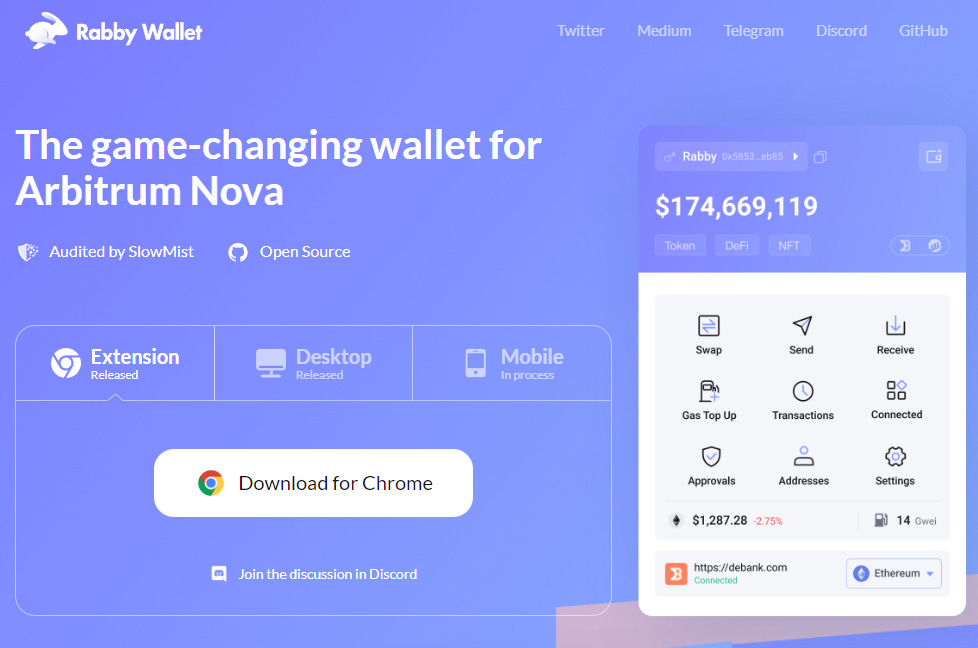
Where to get Rabby and what the download feels like
Check this out—if you want to try Rabby, you can grab it from this link here and install it like any browser extension. Wow! The install flow is quick and the onboarding walks you through accounts and networks without being preachy, which is nice. I tried importing an existing seed and creating a fresh account in the same session, and both felt snappy and predictable. For anyone juggling EVM chains, the multi‑account view and clear chain labels save real time, and time is money in DeFi.
Here’s what bugs me about most wallets: they pretend multi‑chain is simple, then hide the important settings. Really? Rabby surfaces those settings without screaming at you, which I appreciate. My instinct said “this will be fiddly,” but actually, wait—let me rephrase that—this is fiddly in general, but Rabby makes the fiddliness manageable. There are still edge cases (custom RPCs with odd gas rules, very very weird token metadata), so don’t expect perfection. Still, somethin’ about how Rabby organizes approvals and nonce controls feels mature.
Security-wise Rabby isn’t a hardware wallet replacement, and I’m not claiming that; use a ledger if you need hardware‑level signing. Whoa! But Rabby’s approach to isolating permissions, and showing which chain and account a prompt is for, reduces mistake risk. On the analytic side, the transaction simulation and approval breakdowns help you spot suspicious requests before you confirm, and that is a behavior modifier. Initially I thought those UI cues were cosmetic, but then I saw them stop a sloppy approval in my own session — that was an “aha” moment.
Okay, so check this out—Rabby also leans into advanced features like one‑click contract approvals revocation and per‑site account mapping, which feel like small things until you rely on them daily. Hmm… on one hand those features speed up complex flows; on the other hand, power features can be dangerous in inexperienced hands. I’m not 100% sure the current help text is sufficient for new users, and that part bugs me, because DeFi mistakes are painful. Still, I’m impressed by the focus on reducing approval blast radius without sacrificing composability.
FAQ
Is Rabby safe for day‑to‑day DeFi activity?
For most users, yes — Rabby adds helpful UI guardrails and makes approvals more explicit, which reduces accidental exposure. Really? Yes, those guardrails are practical and not just visual fluff. On a personal level I use Rabby alongside a hardware wallet for larger positions, which is my safety pattern. On the technical side, it doesn’t remove the need for careful review of contract calls, but it does make that review clearer and faster. So, long story short: it’s safer than many browser wallets, but treat it like a tool, not a silver bullet.
Does it support all chains and tokens I might need?
Rabby focuses on EVM‑compatible chains and has a broad list out of the box, though you can add custom RPCs when needed. Whoa! Some niche or newer chains may need manual configuration, so expect to tinker a bit. Initially I assumed every chain I throw at it would work flawlessly, but then I ran into a custom RPC that needed tweaks. That said, for mainstream L2s and sidechains it’s solid and consistent, and you can map accounts to specific sites which helps keep assets organized… and sane.

Estudié comunicación mas el deseo de escribir me viene, sobre todo, de las
ganas de escuchar con profundidad a las personas.
Me pongo lentes diversos para comprender lo que cada uno me cuenta, desde su
propio punto de vista. Soy toda oídos.
Mi desafío es materializar la necesidad de cada cliente en textos persuasivos y
creativos. Acompañar para descubrir el brillo propio de cada proyecto.
Practique mucho, entrené el músculo de la escritura. Hoy me siento segura
para expresar claramente mis ideas y también las de los demás.
Elegir con dedicación esas pocas y voluminosas palabras que te hagan sentir
sí, eso es lo que quería decir.
“Te escucho 100%. Me adapto a tu necesidad y a tu público. Relataremos historias vívidas porque las ideas atraen
pero las experiencias, arrastran.
Nos focalizamos en lo que tenés, no lo que te falta. Esa potencia es siempre el punto de partida. Jamás podré sacarme los anteojos en “4D” que me regaló mi amiga Lala Deheinzelin. Para evaluar los proyectos desde múltiples dimensiones para sumar valor (Con lentes 4D, vemos no solo las riquezas tangibles, como lo ambiental y lo financiero, sino también las intangibles, como lo social y lo cultural).
Soy entusiasta de la potencia de la red. Complementamos para armar equipos de trabajo poderosos”.